ASIA The Awakening of the Giant While the United States celebrates having invented the modern game, Asia is quietly building the system that could redefine it.
ASIA
The Awakening of the Giant
While the United States celebrates having invented the modern game, Asia is quietly building the system that could redefine it.
Asia Is Not Asking For Permission System Building In Motion
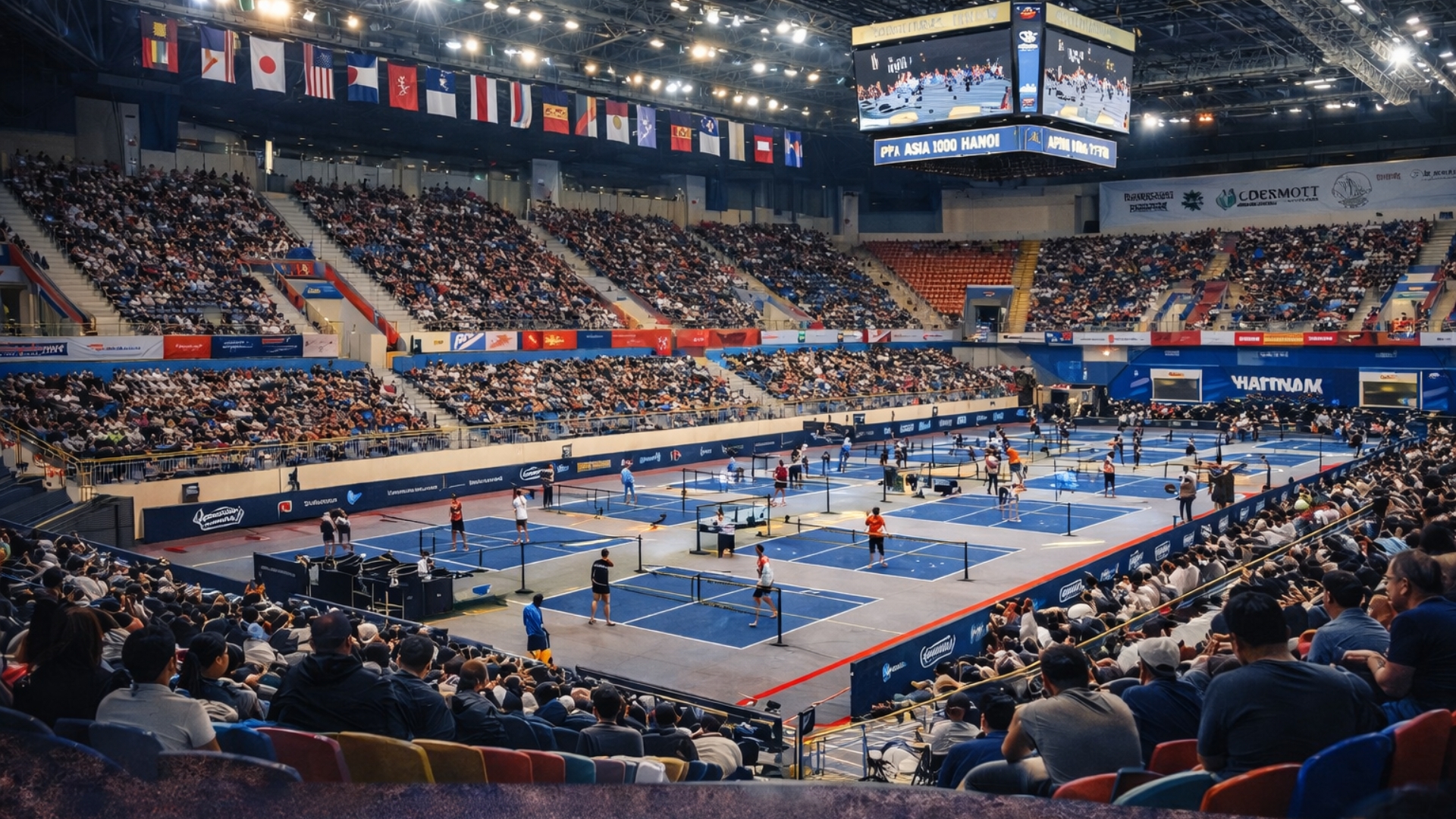
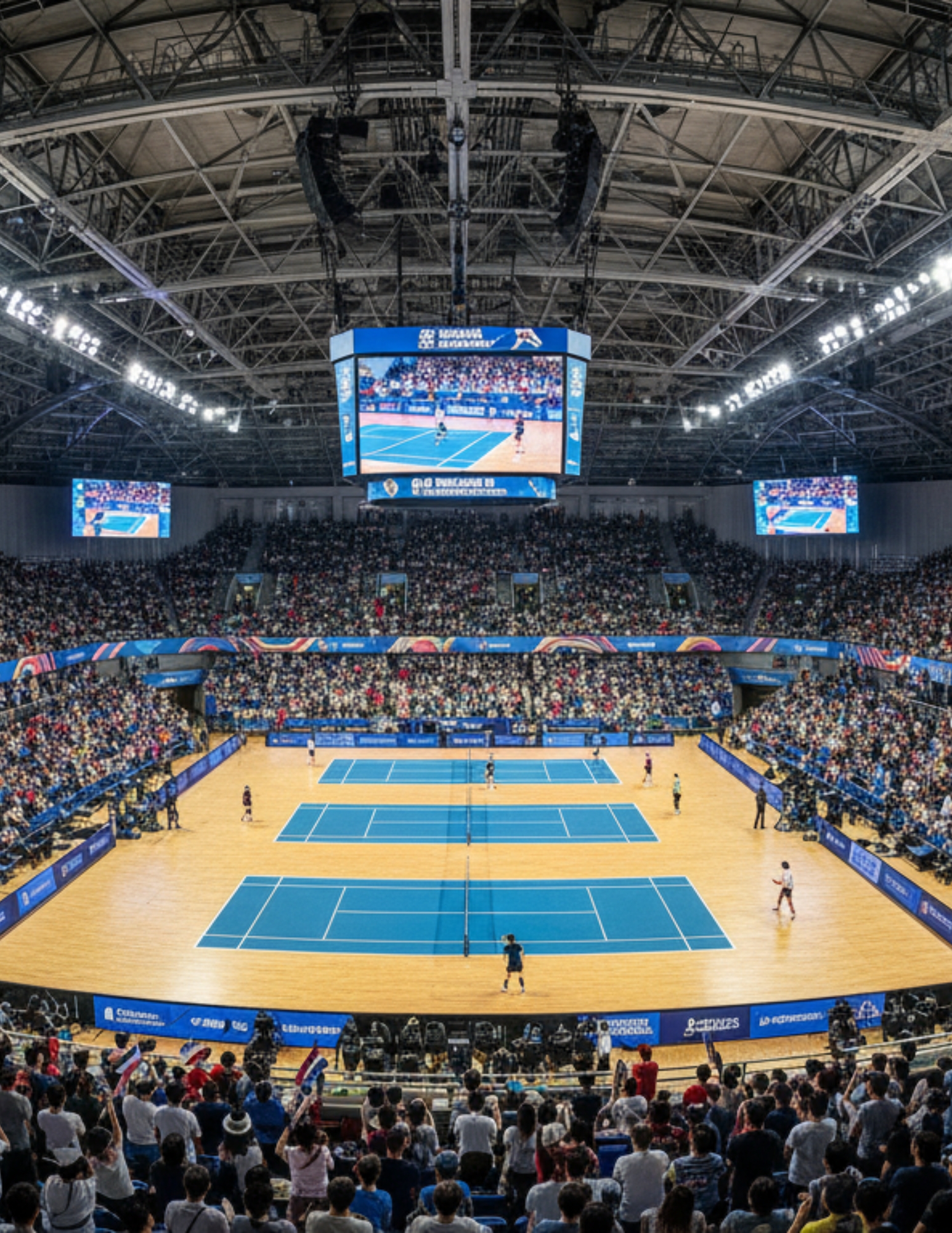
While much of the global conversation around pickleball still centers on prize pools, television contracts, and professional rivalries in the United States, a quieter transformation is unfolding across Asia.
This transformation is not driven by hype. It is driven by structure.
National federations are formalizing governance. Youth development programs are being aligned with long-term strategic planning. Municipal governments are integrating pickleball into public facility expansion. Brick planners are incorporating courts into multi-use community spaces.
This is not recreational enthusiasm. It is institutional alignment.
In Singapore, infrastructure planning has already responded to demand surges in court bookings. In Japan, development pathways are being discussed with Olympic-level ambition in mind. In India, pickleball has entered formal recognition frameworks. In China, international hosting rights signal not curiosity, but positioning.
The distinction is critical.
A sport grows through excitement.
A sport matures through system design.
And systems, once built, redefine the balance of power.
Asia is accelerating both simultaneously — expanding participation while engineering permanence. The United States built the spectacle: stars, broadcasts, prize money, and narrative momentum. Asia is building the structural architecture beneath it — federations aligned under governance, standardized competition frameworks, youth development pipelines, coaching certification pathways, and long-term facility integration within public planning systems.
Multi-sport complexes are being developed with dedicated pickleball layouts. Municipal recreation centers are allocating indoor space with permanence in mind, while urban developers integrate courts as lifestyle anchors inside residential master plans.
This is how a sport moves from enthusiasm to infrastructure.
This is how participation becomes embedded.
And embedded sports endure.
Asia Is Producing Athletes
Asia’s acceleration is not accidental.
It is athletic.
The region carries decades of excellence in precision racquet sports — table tennis, badminton, squash, and soft tennis. These disciplines cultivate timing, disciplined footwork, pattern recognition, and tactical patience. The translation into pickleball is not theoretical. It is mechanical.
Athletes are not discovering the sport recreationally. Many are transitioning into it with structured training backgrounds and competitive intelligence already embedded.
LOVE PICKLEBALL?
Get Dink Authority Magazine updates, new editions, pro stories and event alerts.
We respect your privacy. Unsubscribe anytime.
The case of Yuta Funemizu, a world champion in soft tennis who signed to compete on the Professional Pickleball Association tour, represents more than a single athlete’s crossover. It signals the beginning of structured talent transfer.
Across emerging Asian circuits, names such as Wong Hong Kit, Long Yufu, Ammar Bhatia, Kenta Miyoshi, and rising regional competitors are appearing with increasing consistency.
They may not yet headline American broadcasts, but talent does not require visibility to become formidable.
What matters is pipeline.
And pipeline is forming.
The deeper transformation will not come solely from crossover athletes. It will come from the generation being directly raised in pickleball — children training within academies, school systems integrating structured competition, and youth programs aligning with national federations.
Native players formed within the geometry of this sport from the beginning.
When that generation matures, the competitive balance may look very different.
ASIA IS NOT FOLLOWING.
IT IS DEFINING.
From crossover athletes to native development pipelines, Asia is not adapting to pickleball — it is reshaping how the sport will evolve.
Asia’s acceleration is not accidental. It is athletic.
The region carries decades of excellence in precision racquet sports — table tennis, badminton, squash, and soft tennis. These disciplines cultivate timing, disciplined footwork, pattern recognition, and tactical patience. The translation into pickleball is not experimental. It is structural.
Athletes are not discovering the sport casually. Many are entering it with competitive systems already embedded in their training DNA.
The case of Yuta Funemizu, a world champion in soft tennis who signed to compete on the Professional Pickleball Association tour, represents the beginning of a deliberate transfer of elite racquet skill into a rapidly expanding sport.
Across emerging Asian circuits, names such as Wong Hong Kit, Long Yufu, Ammar Bhatia, Kenta Miyoshi, and rising regional competitors are appearing with increasing consistency. They may not yet dominate American broadcasts, but talent does not require immediate visibility to become formidable.
What matters is structure.
And structure produces pipeline.
The deeper transformation will not come solely from crossover athletes. It will come from the generation being directly raised in pickleball — children training inside academies, school systems integrating structured competition, and youth programs aligning with national federations.
Native players — formed within the geometry, tempo, and tactical logic of this sport from the beginning.
When that generation matures, the competitive balance of global pickleball may look very different.
THE SHIFT IS IN MOTION.
Pickleball may have been born in America.
But its next chapter may not be written there alone.
The United States built the spectacle — the stars, the rivalries, the broadcast narratives, the professional circuits that turned a backyard game into a global product.
Asia is building something different.
It is building systems.
• Federations aligned with long-term strategy.
• Youth programs structured with development intent.
• Infrastructure integrated into public planning.
• Private capital positioned around lifestyle and permanence.
This is not imitation.
It is adaptation at scale.
And scale changes balance.
The future of pickleball will not be decided by who arrived first.
It will be shaped by who builds with patience, discipline, and structural vision.
Asia is not chasing the game.
It is preparing to redefine it.
And when preparation meets scale, the center of gravity shifts.
— Dink Authority Editorial
ASIA
The Awakening of the Giant
While the United States celebrates having invented the modern game, Asia is quietly building the system that could redefine it.
Asia Is Not Asking For Permission System Building In Motion
While much of the global conversation around pickleball still centers on prize pools, television contracts, and professional rivalries in the United States, a quieter transformation is unfolding across Asia.
This transformation is not driven by hype. It is driven by structure.
National federations are formalizing governance. Youth development programs are being aligned with long-term strategic planning. Municipal governments are integrating pickleball into public facility expansion. Brick planners are incorporating courts into multi-use community spaces.
This is not recreational enthusiasm. It is institutional alignment.
In Singapore, infrastructure planning has already responded to demand surges in court bookings. In Japan, development pathways are being discussed with Olympic-level ambition in mind. In India, pickleball has entered formal recognition frameworks. In China, international hosting rights signal not curiosity, but positioning.
The distinction is critical.
A sport grows through excitement.
A sport matures through system design.
And systems, once built, redefine the balance of power.
Asia is accelerating both simultaneously — expanding participation while engineering permanence. The United States built the spectacle: stars, broadcasts, prize money, and narrative momentum. Asia is building the structural architecture beneath it — federations aligned under governance, standardized competition frameworks, youth development pipelines, coaching certification pathways, and long-term facility integration within public planning systems.
Current Issue

Dink Authority Magazine – April 2026
Read Now →
Multi-sport complexes are being developed with dedicated pickleball layouts. Municipal recreation centers are allocating indoor space with permanence in mind, while urban developers integrate courts as lifestyle anchors inside residential master plans.
This is how a sport moves from enthusiasm to infrastructure.
This is how participation becomes embedded.
And embedded sports endure.
Asia Is Producing Athletes
Asia’s acceleration is not accidental.
It is athletic.
The region carries decades of excellence in precision racquet sports — table tennis, badminton, squash, and soft tennis. These disciplines cultivate timing, disciplined footwork, pattern recognition, and tactical patience. The translation into pickleball is not theoretical. It is mechanical.
Athletes are not discovering the sport recreationally. Many are transitioning into it with structured training backgrounds and competitive intelligence already embedded.
LOVE PICKLEBALL?
Get Dink Authority Magazine updates, new editions, pro stories and event alerts.
We respect your privacy. Unsubscribe anytime.
The case of Yuta Funemizu, a world champion in soft tennis who signed to compete on the Professional Pickleball Association tour, represents more than a single athlete’s crossover. It signals the beginning of structured talent transfer.
Across emerging Asian circuits, names such as Wong Hong Kit, Long Yufu, Ammar Bhatia, Kenta Miyoshi, and rising regional competitors are appearing with increasing consistency.
They may not yet headline American broadcasts, but talent does not require visibility to become formidable.
What matters is pipeline.
And pipeline is forming.
The deeper transformation will not come solely from crossover athletes. It will come from the generation being directly raised in pickleball — children training within academies, school systems integrating structured competition, and youth programs aligning with national federations.
Native players formed within the geometry of this sport from the beginning.
When that generation matures, the competitive balance may look very different.

ASIA IS NOT FOLLOWING.
IT IS DEFINING.
From crossover athletes to native development pipelines, Asia is not adapting to pickleball — it is reshaping how the sport will evolve.
Asia’s acceleration is not accidental. It is athletic.
The region carries decades of excellence in precision racquet sports — table tennis, badminton, squash, and soft tennis. These disciplines cultivate timing, disciplined footwork, pattern recognition, and tactical patience. The translation into pickleball is not experimental. It is structural.
Athletes are not discovering the sport casually. Many are entering it with competitive systems already embedded in their training DNA.
The case of Yuta Funemizu, a world champion in soft tennis who signed to compete on the Professional Pickleball Association tour, represents the beginning of a deliberate transfer of elite racquet skill into a rapidly expanding sport.
Across emerging Asian circuits, names such as Wong Hong Kit, Long Yufu, Ammar Bhatia, Kenta Miyoshi, and rising regional competitors are appearing with increasing consistency. They may not yet dominate American broadcasts, but talent does not require immediate visibility to become formidable.
What matters is structure.
And structure produces pipeline.
The deeper transformation will not come solely from crossover athletes. It will come from the generation being directly raised in pickleball — children training inside academies, school systems integrating structured competition, and youth programs aligning with national federations.
Native players — formed within the geometry, tempo, and tactical logic of this sport from the beginning.
When that generation matures, the competitive balance of global pickleball may look very different.
THE SHIFT IS IN MOTION.
Pickleball may have been born in America.

But its next chapter may not be written there alone.
The United States built the spectacle — the stars, the rivalries, the broadcast narratives, the professional circuits that turned a backyard game into a global product.
Asia is building something different.
It is building systems.
• Federations aligned with long-term strategy.
• Youth programs structured with development intent.
• Infrastructure integrated into public planning.
• Private capital positioned around lifestyle and permanence.
This is not imitation.
It is adaptation at scale.
And scale changes balance.
The future of pickleball will not be decided by who arrived first.
It will be shaped by who builds with patience, discipline, and structural vision.
Asia is not chasing the game.
It is preparing to redefine it.
And when preparation meets scale, the center of gravity shifts.
— Dink Authority Editorial